

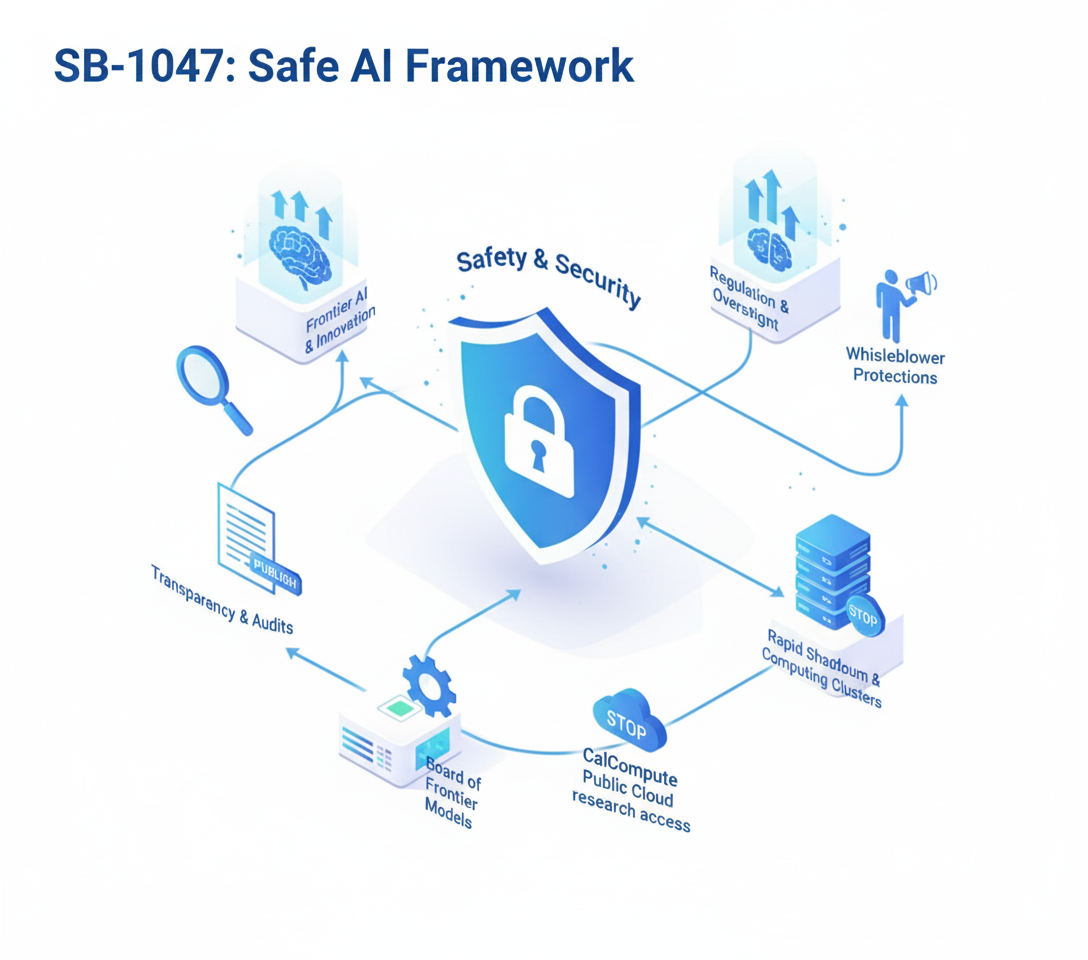
SB-1047, the Safe and Secure Innovation for Frontier Artificial Intelligence Models Act, would have established new requirements in California for developers of powerful artificial intelligence (AI) models, aiming to address risks of advanced AI while supporting innovation.
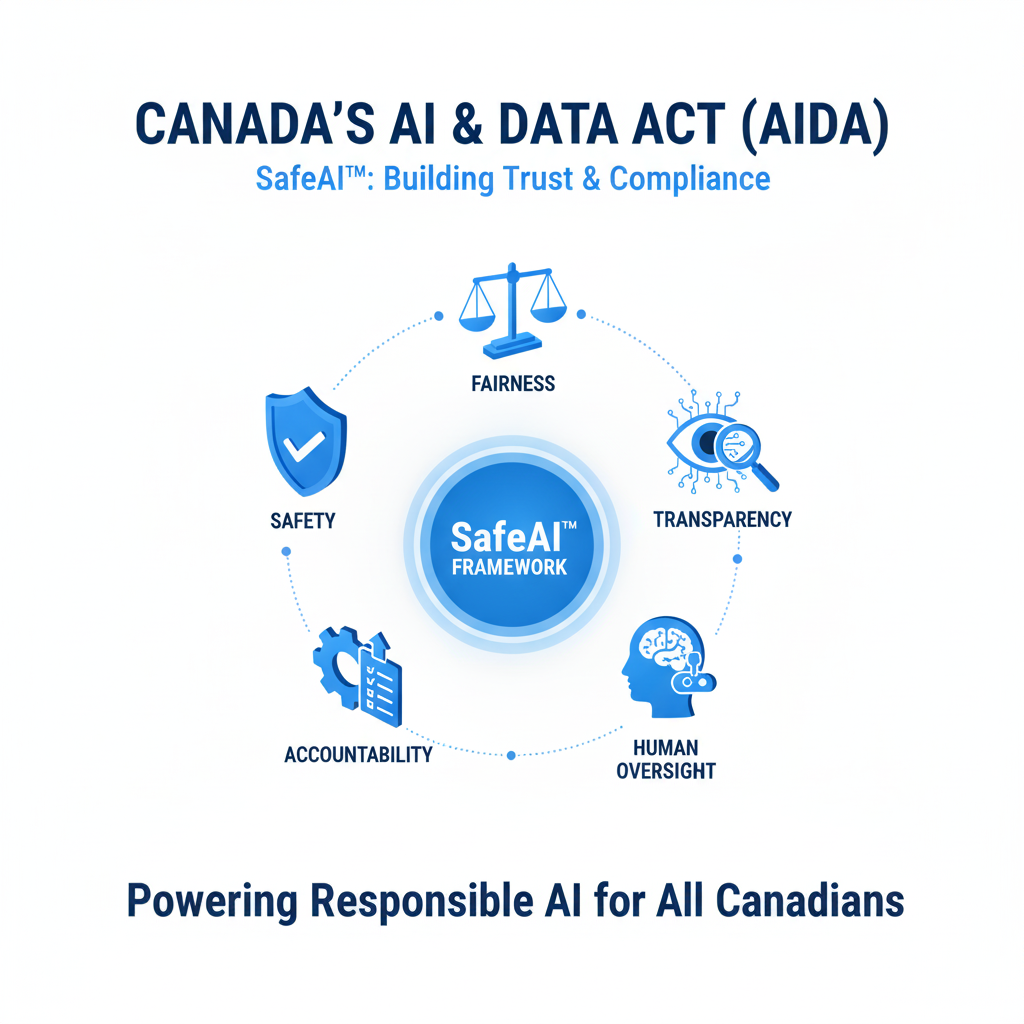
Canada’s Artificial Intelligence and Data Act (AIDA)
Learn about Canada’s Artificial Intelligence and Data Act (AIDA) – ensuring safe, fair, and transparent AI while supporting innovation.
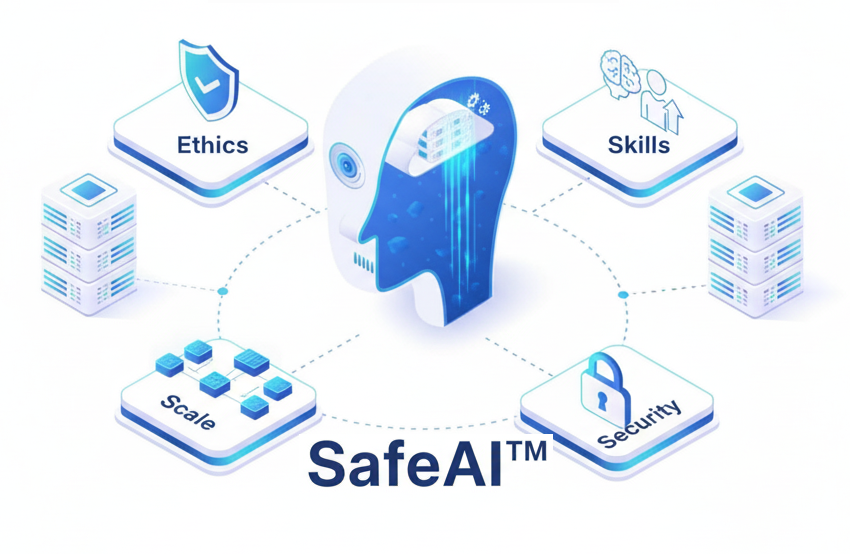
Why 2025 is the Year of Responsible AI Adoption
Artificial Intelligence is no longer a future vision — it’s today’s reality. From education and healthcare to marketing and finance, AI is driving transformation across every industry. But as adoption accelerates in 2025, one theme is becoming clear: responsible AI is no longer optional — it’s essential.
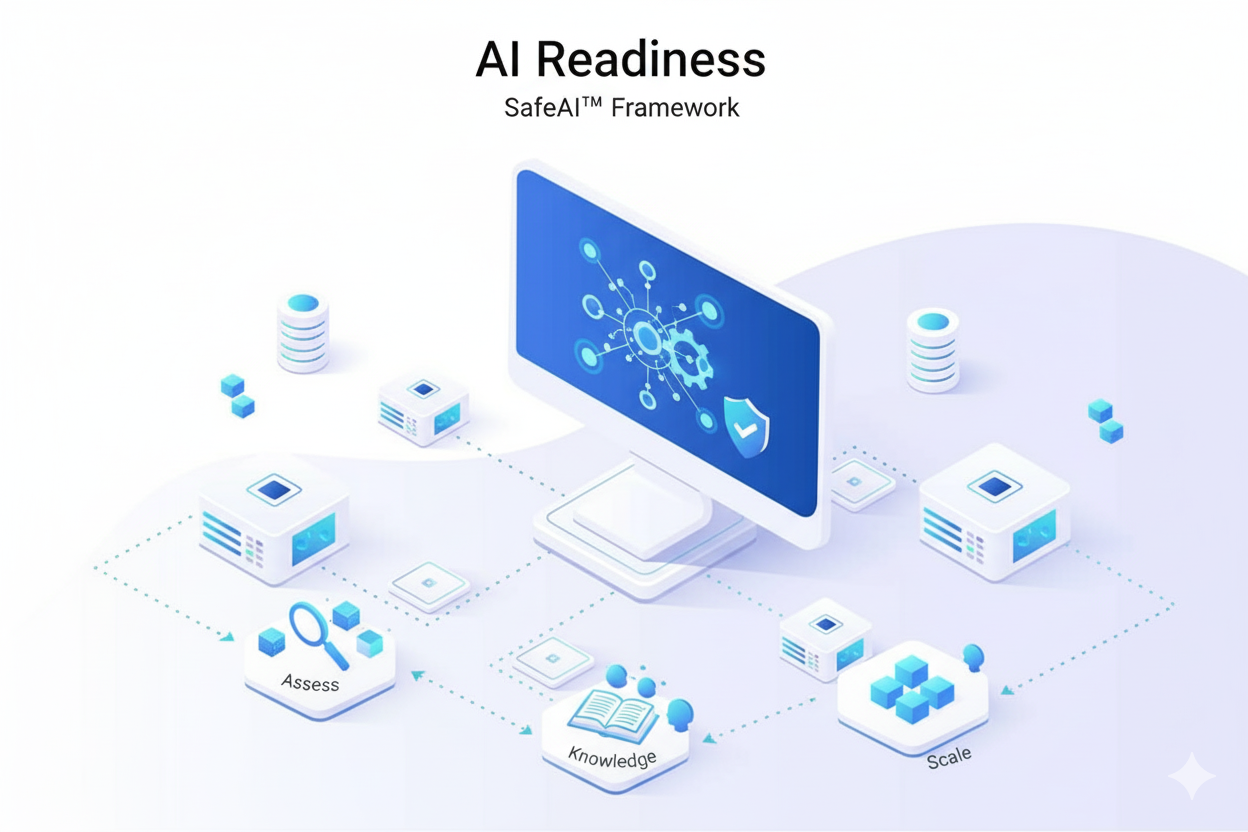
How to Prepare Your Organization for AI Adoption
Artificial Intelligence promises efficiency, innovation, and smarter decisions — but jumping in without a plan can backfire. Many organizations rush into AI pilots only to discover that without strategy, ethics, and training, adoption stalls.
At Pacific West Education Hub, we’ve seen a clear pattern: successful AI adoption begins with readiness.
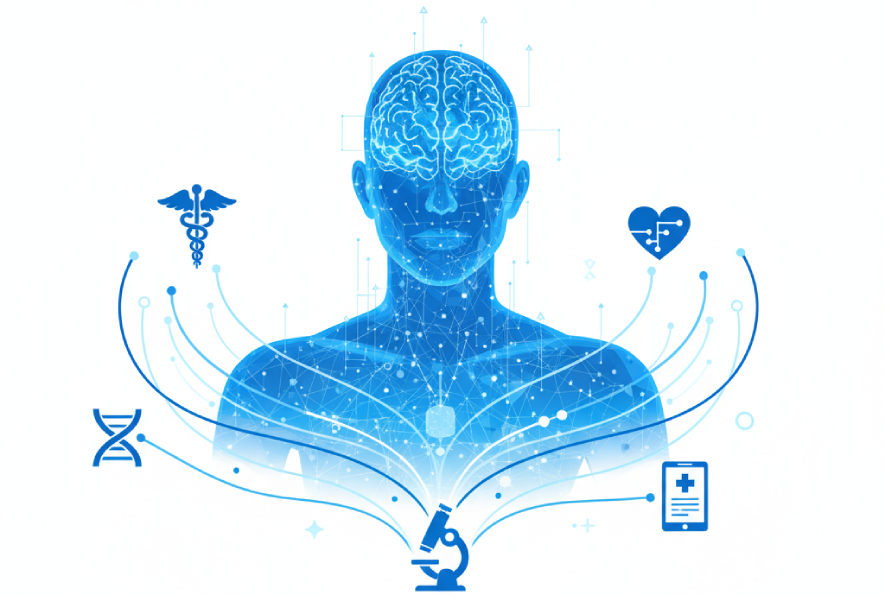
How AI Is Transforming Healthcare in 2025: Trends, Impact & Innovation
Artificial Intelligence has evolved from a futuristic concept to a cornerstone of modern healthcare. In 2025, AI is not just enhancing patient care; it’s revolutionizing diagnostics, drug development, and clinical decision-making. Here’s how AI is reshaping the healthcare landscape. 1. AI Adoption Soars Across Healthcare 78% of organizations now utilize AI in at least one business function, a significant increase from 55% the previous year. netguru.com In the U.S., AI adoption in healthcare is accelerating, with more institutions implementing AI-driven solutions to improve efficiency and patient outcomes. PMC 2. AI in Diagnostics and Clinical Decision-Making AI-powered tools are now integral in diagnosing heart conditions, with advancements like AI-assisted stethoscopes diagnosing heart issues in just 15 seconds. The Guardian Generative AI is enhancing clinical decision-making by analyzing vast datasets to provide insights that support healthcare professionals in making informed decisions. McKinsey & Company 3. Accelerating Drug Discovery and Development AI is revolutionizing drug discovery by reducing development timelines. For instance, Recursion Pharmaceuticals advanced a cancer drug candidate to clinical trials in just 18 months, significantly faster than the industry average. Reuters The FDA is promoting AI-driven approaches to reduce animal testing, encouraging the adoption of computational models and human-cell-based methods. Reuters 4. Personalized Fertility and Reproductive Care AI is enhancing infertility treatments by improving diagnosis, embryo selection, and preservation techniques, leading to more personalized care. The Times of India AI applications are also being explored in reproductive health to address challenges like polycystic ovary syndrome (PCOS) and male infertility factors. The Times of India 5. Global Expansion and Cross-Sector Innovation AI’s impact is global, with countries like Ghana utilizing AI to identify and classify medicinal plants, and South Korea analyzing traditional medicine compounds to treat blood disorders. World Economic Forum In veterinary care, platforms like Heidi Health are streamlining administrative tasks, allowing clinicians to focus more on patient care. The Australian 6. Building Trust and Addressing Ethical Concerns The Future Health Index 2025 report emphasizes the importance of building trust in healthcare AI, highlighting the need for transparency and ethical considerations in AI implementations. Philips 7. Market Growth and Investment The global AI healthcare market is projected to reach $45.2 billion by 2026, with a compound annual growth rate (CAGR) of 36.4% from 2024 to 2030. Dialog Health Investment in AI healthcare startups is on the rise, with companies like Reveal HealthTech securing significant funding to expand their AI-driven solutions. The Economic Times Why It Matters AI is not just a tool but a transformative force in healthcare. Its integration is enhancing efficiency, personalizing patient care, and accelerating medical advancements. However, as adoption grows, so does the need for ethical considerations, transparency, and trust-building measures to ensure AI’s positive impact on global health.
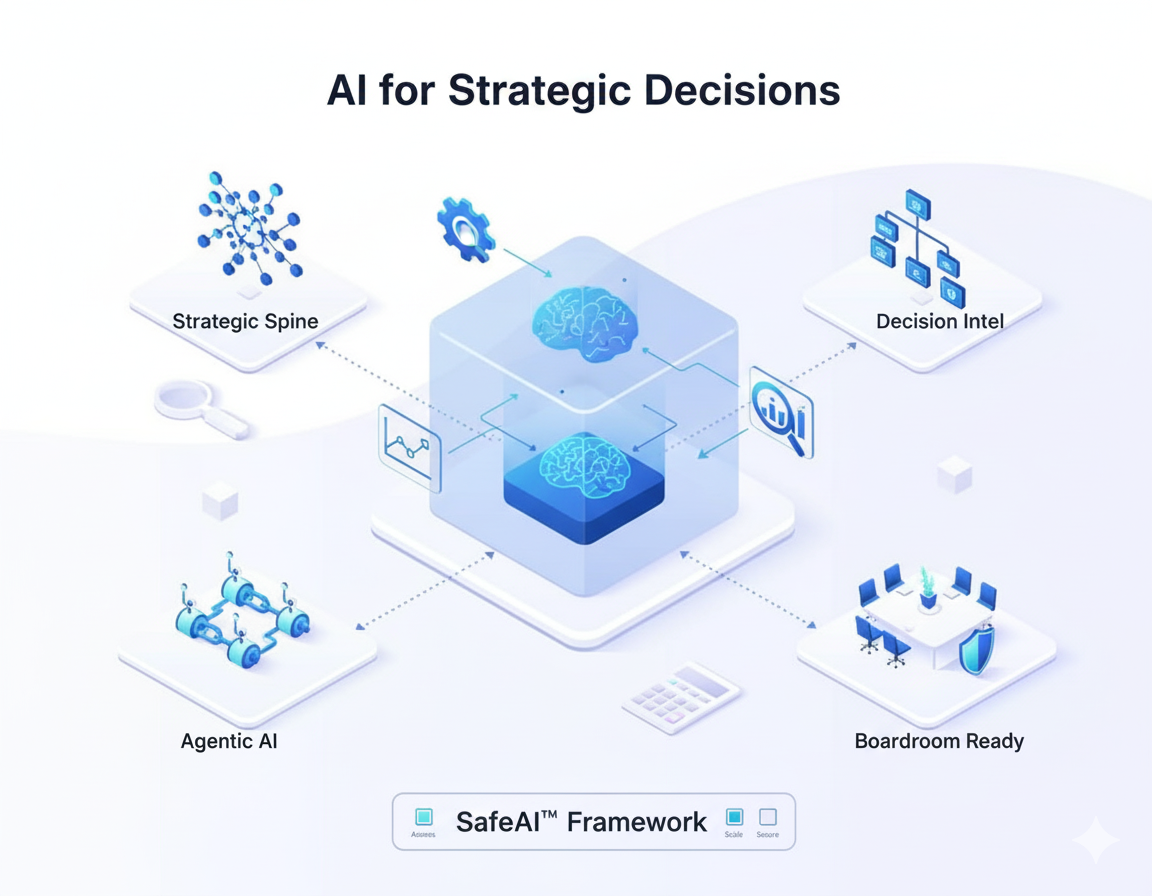
AI for Smarter, Strategic Decision-Making in 2025
In 2025, AI is rewriting how businesses make decisions—from daily operations to boardroom strategy. But smart adoption isn’t just about tech; it’s about trust, context, and governance. Here’s what’s shaping enterprise decision-making today, and how SafeAI™ helps you stay ahead. Key Trends in AI-Powered Business Decisioning 1. AI Is Becoming the Strategic Spine of Enterprises According to Stanford’s 2025 AI Index, 78% of organizations used AI in 2024—up from 55% the year beforeStanford HAI. McKinsey finds that while nearly all firms invest in AI, only 1% consider themselves mature in adopting it—pointing to a focus gap on executionMcKinsey & Company. 2. Decision Intelligence Is Entering the Mainstream AI platforms that blend business rules, machine learning, and generative intelligence are becoming vital. These unified systems elevate decision accuracy, accountability, and agilityInRule. FICO’s platform leads in this space, offering modular, scalable AI decisioning for faster, more accurate outcomes across complex workflowsFICO. 3. Agentic AI Is Spreading Across Organizations AI agents are shifting from “co-pilot” tools to “autopilot” systems capable of autonomous task execution across departments—underpinned by LLMs and agentic logicFinancial Times. Qualtrics is already embedding multiagent AI for real-time customer and employee engagement—representing the new norm of agents operating across workflowsBusiness Insider. 4. Enterprise AI Is Going Boardroom-Ready As AI becomes a business core, governance, data control, and model transparency are escalating to board-level priorities—especially in regulated sectorsWorld Economic Forum. PwC predicts that AI maturity hinges on both vision and integration—with many companies already embedding AI into core strategy and product lifecyclesPwC. 5. Under the Hood: Custom Hardware, Smart Metrics, and Reasoning AI Enterprises are adopting AI reasoning, custom silicon, cloud migrations, and ROI-tracking systems to meet demands for performance, security, and profitabilityMorgan Stanley. Why These Trends Matter Challenges Businesses Face How SafeAI™ Answers Them Siloed AI pilots with limited integration or governance Provides structured guidance from Learn → Build → Apply → Secure Limited transparency in decision logic and AI outcomes Incorporates explainable models, human-in-the-loop checks, and oversight Rapid adoption without strategic alignment Embeds AI directly into business strategy with measurable ROI Trust, compliance, and AI sovereignty concerns Enforces governance, ethical frameworks, and data/model control Final Thought: Execute AI with Trust and Strategy AI isn’t just speeding up decisions—it’s reshaping how organizations envision strategy and operations. But to deliver value, it’s crucial to build AI that’s strategic, accountable, and scalable. With the SafeAI™ Framework, businesses can confidently navigate this transition—ensuring AI enhances human judgment, stays aligned with business goals, and adheres to ethical standards.